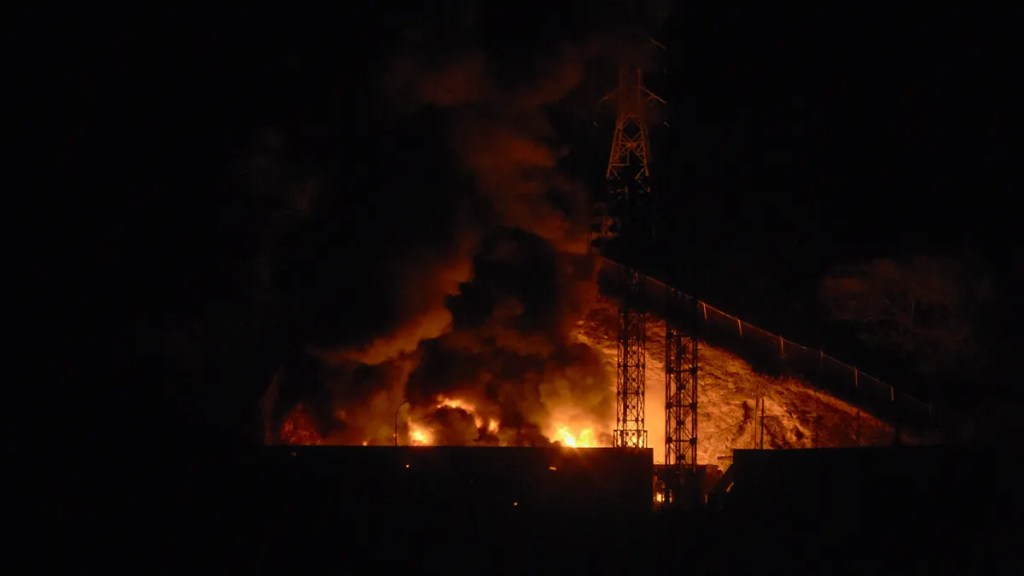
The geopolitical world woke up today to a transformed Western Hemisphere. In the early hours of January 2, 2026, ‘Operation Absolute Resolve’ saw 150 U.S. aircraft dismantle Venezuelan air defenses to extract Nicolás Maduro and his wife, Cilia Flores, from the capital of Caracas. While the administration frames this as a ‘triumph for justice,’ many see validation of a profound shift in the American executive’s relationship with the law, the Constitution, and the global order.
1. The Constitutional Crisis: Rule by Decree
President Trump’s unilateral order to invade a sovereign nation and his subsequent declaration that the U.S. will ‘run the country’ is a direct assault on the separation of powers. By executing this attack without Congressional approval, the administration has bypassed the core checks and balances of U.S. law:
- Article I, Section 8 (The War Power): The Constitution grants Congress the exclusive power to ‘Declare War.’ While the Executive Branch has historically used the ‘Commander-in-Chief’ clause (Article II) to justify short-term defensive actions, this was a ‘months-long planned’ campaign involving a massive flotilla and air armada (Trump, 2026). As noted by legal critics, this represents a ‘blithe disregard’ for the legislative branch (Kahloon, 2026).
- The War Powers Resolution of 1973: This law requires the President to consult with Congress ‘in every possible instance’ before introducing forces into hostilities. The administration’s defense – that this was a ‘law enforcement function’ to serve an arrest warrant – is transparent legal fiction (Reuters, 2026). Using B-1 bombers to disable a nation’s military infrastructure constitutes hostilities by any reasonable standard.
- International Law (UN Charter Article 2(4)): The U.S. is a signatory to the UN Charter, which prohibits the use of force against the territorial integrity of any state. By treating Venezuela as a ‘fugitive’s hideout’ rather than a sovereign nation, the U.S. has effectively declared that international borders are secondary to American executive will (Buschschlüter, 2026).
2. Strategic Pretext: The Fentanyl Fallacy and the JOH Paradox
The administration’s stated motive of stopping ‘narco-terrorism’ and the flow of fentanyl is fundamentally undermined by its own data and its recent judicial interventions.
- The Fentanyl Mismatch: President Trump has designated fentanyl as a ‘Weapon of Mass Destruction’ to justify this military intervention. However, according to the DEA’s own 2025 National Drug Threat Assessment, fentanyl is produced primarily in China and Mexico, entering the U.S. almost exclusively via land through the southern border, not via Venezuelan sea routes. Venezuela remains a ‘relatively minor player’ in global drug trafficking, acting mostly as a transit point for cocaine (Buschschlüter, 2026).
- The JOH Pardon: The ‘anti-drug’ narrative is further crippled by the November 28, 2025, pardon of former Honduran President Juan Orlando Hernández (JOH). JOH was convicted by a U.S. jury for facilitating the transit of 400 tons of cocaine into America. Trump dismissed JOH’s conviction as a ‘Biden setup,’ even as he now uses identical drug-trafficking charges to justify the invasion of Venezuela (Yousif, 2025).
This selective justice reveals the true motive: OIL.
In his address today, Trump mentioned oil more than justice. He spoke of ‘reimbursement,’ sending in ‘our very large United States oil companies,’ and ‘taking back’ an industry he claims the U.S. built. By reclassifying fentanyl as a ‘Weapon of Mass Destruction’ and Maduro’s government as a ‘Foreign Terrorist Organization,’ the administration has created a security pretext to seize the world’s largest oil reserves (303 billion barrels). The Donroe Doctrine isn’t about stopping drugs; it’s about a mercantilist pay-to-play foreign policy where the U.S. military acts as a collection agency for American corporations.
3. Economic Impact: A Trillion-Dollar Gamble
President Trump insists that this operation ‘won’t cost us a penny’ because the U.S. will be reimbursed by ‘money coming out of the ground’ (Trump, 2026). However, the specific impacts on the American economy and the average consumer are likely to be far more volatile and expensive than promised.
- The ‘Nation-Building’ Tax: While Trump claims oil companies will foot the bill, analysts note that Venezuela’s oil infrastructure is rotted and dilapidated. Reclaiming the industry requires an estimated $10 billion just for a minor production increase, and tens of billions for a full recovery (Reed, 2026). If stability is not achieved quickly, the U.S. consumer may face the sobering precedents of Iraq and Libya, where initial self-funding promises evolved into multi-trillion-dollar taxpayer burdens (Reuters, ‘Oil Industry,’ 2026).
- Shock at the Pump: Despite holding 17% of global reserves, the current total naval blockade and the military power vacuum in Venezuela (Reuters, ‘Trump says Maduro captured,’ 2026) are likely to trigger an immediate spike in global oil prices. For the U.S. consumer, the uncertainty of a hot war in South America often translates to higher gas prices and increased costs for transported goods, at least in the short-to-medium term.
- Refinery Reliance: Many U.S. Gulf Coast refineries are specifically configured to process the ‘heavy oil’ found in Venezuela (Reuters, ‘Oil Industry,’ 2026). While a successful takeover could eventually provide a steady stream of cheap heavy crude, any sabotage or prolonged fighting in the Orinoco region would leave these American refineries underutilized, potentially driving up the price of refined gasoline and heating oil for U.S. households.
- Retaliation and Inflation: China is currently Venezuela’s largest buyer and creditor, holding roughly $10 billion in debt (Reuters, ‘Oil Industry,’ 2026). By seizing these assets, the U.S. invites economic retaliation from Beijing. If China responds with trade tariffs or by offloading U.S. Treasuries, the American consumer will feel the impact through higher interest rates and increased prices for everyday imported goods (Kahloon, 2026).
4. Alignment with Authoritarian and Fascist Behavior
For scholars of political science, the rhetoric of ‘Operation Absolute Resolve’ mirrors several hallmarks of authoritarianism:
- Action over Deliberation: Secretary Hegseth’s praise for a president who is ‘not a game player’ and who ‘actions it’ celebrates the bypass of democratic debate (Trump, 2026). This ‘cult of action’ is a primary feature of fascist political theory.
- Corporatism: The plan to have the U.S. government and private oil giants run a foreign state under military protection mirrors the corporatist pillar of 20th-century autocracies, where state power and corporate interests become indistinguishable (Reed, 2026).
- Erosion of Judicial Independence: Pardoning an ideological ally (JOH) while extracting an enemy (Maduro) using the same legal charges demonstrates that the law is being used as a weapon for political dominance rather than a universal standard (Yousif, 2025).
Final Thoughts
Today, the administration didn’t just capture a dictator. It captured a country. In doing so, it has traded rules-based international order for a ‘might-makes-right’ doctrine. As we watch Maduro head to a New York courtroom, we must ask ourselves – if the President can ignore Congress to attack and ‘run’ Venezuela today, what is to stop the use of similar emergency powers at home tomorrow?
The ‘Donroe Doctrine’ has arrived, and the price of oil might be the very democracy we claim to protect.
References
- Buschschlüter, V. (2026). Why has Trump attacked Venezuela and taken Maduro? BBC News.
- Kahloon, I. (2026). Making Sense of the Venezuela Attack. The Atlantic.
- Reed, S. (2026). The Venezuelan Oil Industry Trump Is Planning to Revive. The New York Times.
- Reuters. (2026, Jan 3). Trump says Venezuela’s Maduro captured after strikes.
- Reuters. (2026, Jan 3). Venezuelan oil industry: world’s largest reserves, decaying infrastructure.
- Trump, D. J. (2026, Jan 3). Transcript of President Donald J. Trump’s Speech on Operation Absolute Resolve. Mar-a-Lago Press Conference.
- Yousif, N. (2025, Dec 2). What was Honduras ex-president convicted of and why has Trump pardoned him? BBC News/Reuters.
 Citizen's Quill
Leave a comment