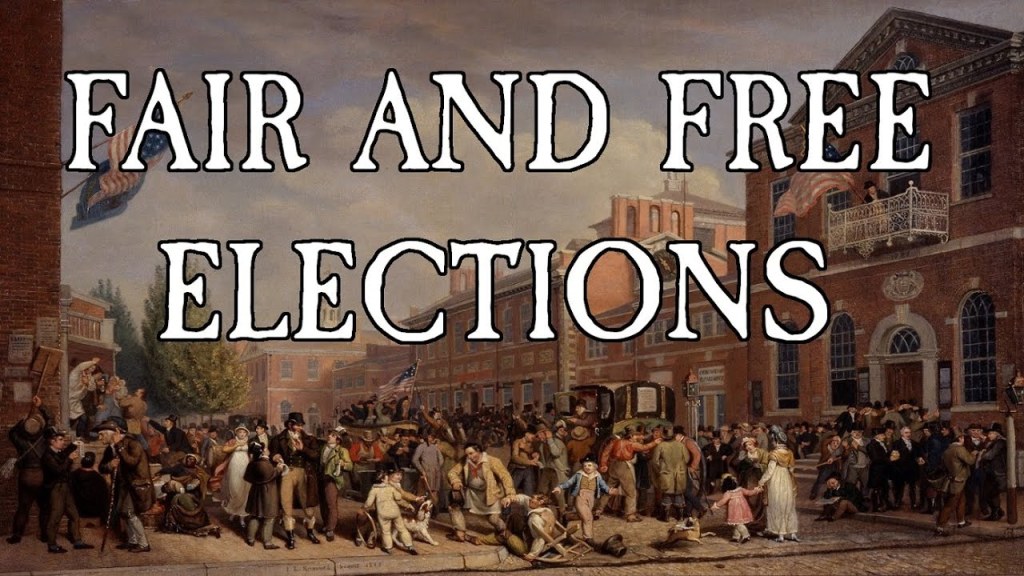
The health of a democracy is measured not just by the act of voting, but by the assurance that elections are accessible, fair, and free from intimidation. As the 2026 midterm elections approach, a convergence of administrative actions, legal challenges, and strategic planning suggests that the very foundation of this assurance is significantly under threat.
This isn’t about isolated policy changes. It is a multi-front, coordinated effort that appears to follow a detailed blueprint for fundamentally altering the American electoral landscape. By examining the Trump administration’s current actions alongside the “Mandate for Leadership” – the nearly 1,000-page transition plan developed by The Heritage Foundation’s Project 2025 – a clear, three-pronged strategy emerges: remake the machinery of government, weaken the legal foundations of voting rights, and create a climate of voter intimidation through the use of domestic military force.
The Administrative Takeover: “Personnel Is Policy”
Project 2025 is built on a core principle: “personnel is policy.” The playbook’s first section, “Taking the Reins of Government,” argues for staffing the federal bureaucracy with an “army of aligned, vetted, trained, and prepared conservatives” to “deconstruct the Administrative State” (Dans and Groves, 2023).
Recent events show this philosophy being put into action. An October 2025 report details how the Trump administration has been systematically placing proponents of 2020 election fraud conspiracies into critical government positions.
- Heather Honey, a prominent activist in the election denier movement, was appointed to a newly created position at the Department of Homeland Security (DHS) as deputy assistant secretary for “election integrity.” In calls with state election officials, she reportedly echoed conspiracy theories about voting machines and questioned the mission of cybersecurity experts tasked with combating disinformation.
- Marci McCarthy, known for spreading debunked claims about voting machines in Georgia, was named director of public affairs at the Cybersecurity and Infrastructure Security Agency (CISA).
- Kurt Olsen, a lawyer who worked closely with Mike Lindell to promote “stolen election” theories, has been hired by the White House to examine the 2020 vote.
These appointments are not occurring in a vacuum. They align perfectly with the Project 2025 chapter on the Department of Homeland Security, authored by former Acting Deputy Secretary Ken Cuccinelli. The plan calls for CISA – the very agency responsible for safeguarding elections from cyber threats – to be stripped of its mission to counter “so-called misinformation and disinformation,” which it dismisses as an “unconstitutional censoring and election engineering apparatus” (Dans and Groves, 2023). This strategy effectively proposes to dismantle the government’s primary defense against the very election-related falsehoods that many of the new appointees have promoted.
The Legal Assault: Dismantling the Voting Rights Act
While the administrative state is being remade from within, a parallel legal battle is underway to weaken the primary legislative tool protecting minority voting rights for the last 60 years. The Supreme Court is currently considering Louisiana v. Callais, a case that directly challenges the constitutionality of Section 2 of the Voting Rights Act of 1965.
Section 2 is the law’s most vital remaining provision. It prohibits any voting practice or electoral map that “results in a denial or abridgement of the right of any citizen of the United States to vote on account of race or color” (Brennan Center for Justice, 2025). It has been the primary legal instrument used to challenge racially discriminatory gerrymandering, which dilutes the voting power of communities of color.
During oral arguments in October 2025, the court’s conservative majority appeared inclined to limit Section 2’s use, arguing that a Black-majority House district in Louisiana was drawn with too much consideration of race. A ruling that weakens or strikes down Section 2 would have devastating consequences:
- It would make challenging discriminatory voting maps nearly impossible, opening the door for legislatures across the South to redraw congressional districts in ways that could eliminate majority-Black and Latino districts.
- The greatest impact could be on the local level, where Section 2 has been used for decades to replace discriminatory at-large election systems for city councils and school boards with more representative single-member districts.
This legal challenge, which could fundamentally reshape the electoral map to favor one party, is not an isolated event but a critical component of a broader strategy to control election outcomes.
The Specter of Militarization and Intimidation
Perhaps the most alarming front in this campaign is the increasing use and threatened use of military and heavily armed federal agents on American soil. This strategy combines the elimination of accessible voting methods with a climate of potential intimidation, a tactic outlined as a “three-lock system” by authoritarianist expert Steven Luker (2025).
Lock 1 & 2: Rigging the Maps and Eliminating the Workarounds
First, gerrymandering makes polling places harder to reach. Second, the administration is pushing to “lead a movement to get rid of MAIL-IN BALLOTS” (Luker, 2025), a method used by 65.7 million Americans in 2024. President Trump has stated he was advised by Russian President Vladimir Putin that “it’s impossible to have mail-in voting and have honest elections” (Luker, 2025). Eliminating this option would disenfranchise an estimated 25 to 35 million voters, including:
- Active-duty military members and their families overseas.
- Seniors and disabled Americans with mobility challenges.
- Parents, caregivers, and hourly shift workers who cannot wait in long lines.
- College students and rural voters who live far from their registered precincts.
Lock 3: An Environment of Intimidation
This is where the deployment of armed forces becomes a critical tool.
Military Occupation: The administration has already deployed over 7,400 National Guard and active-duty troops to Washington D.C., Los Angeles, Portland, and Chicago. These deployments are being inaccurately justified as a response to crime, despite violent crime declining in most of these cities. The administration is clearly placing troops in “blue” cities, while “red” cities and states with the highest crime rates are exempt. This plan is directly supported by the Project 2025 Department of Defense chapter, written by former Acting Secretary of Defense Christopher Miller, which lists as a key priority to “Provide necessary support to Department of Homeland Security (DHS) border protection operations” (Dans and Groves, 2023).
- The Insurrection Act: President Trump has repeatedly floated the idea of invoking the Insurrection Act, which he calls “the strongest power a president has” (Suter, 2025). This 19th-century law would grant him sweeping power to deploy active-duty troops for domestic law enforcement, bypassing the Posse Comitatus Act which normally prohibits it. Legal scholars warn that while invoking the Act would face court challenges, the law’s vague language gives the President “tremendous discretion.” Legal analyst Richard Bernstein (2025) warns that legal arguments currently being made by the administration could neuter the federal criminal laws that explicitly prohibit deploying troops to polling places or interfering with elections.
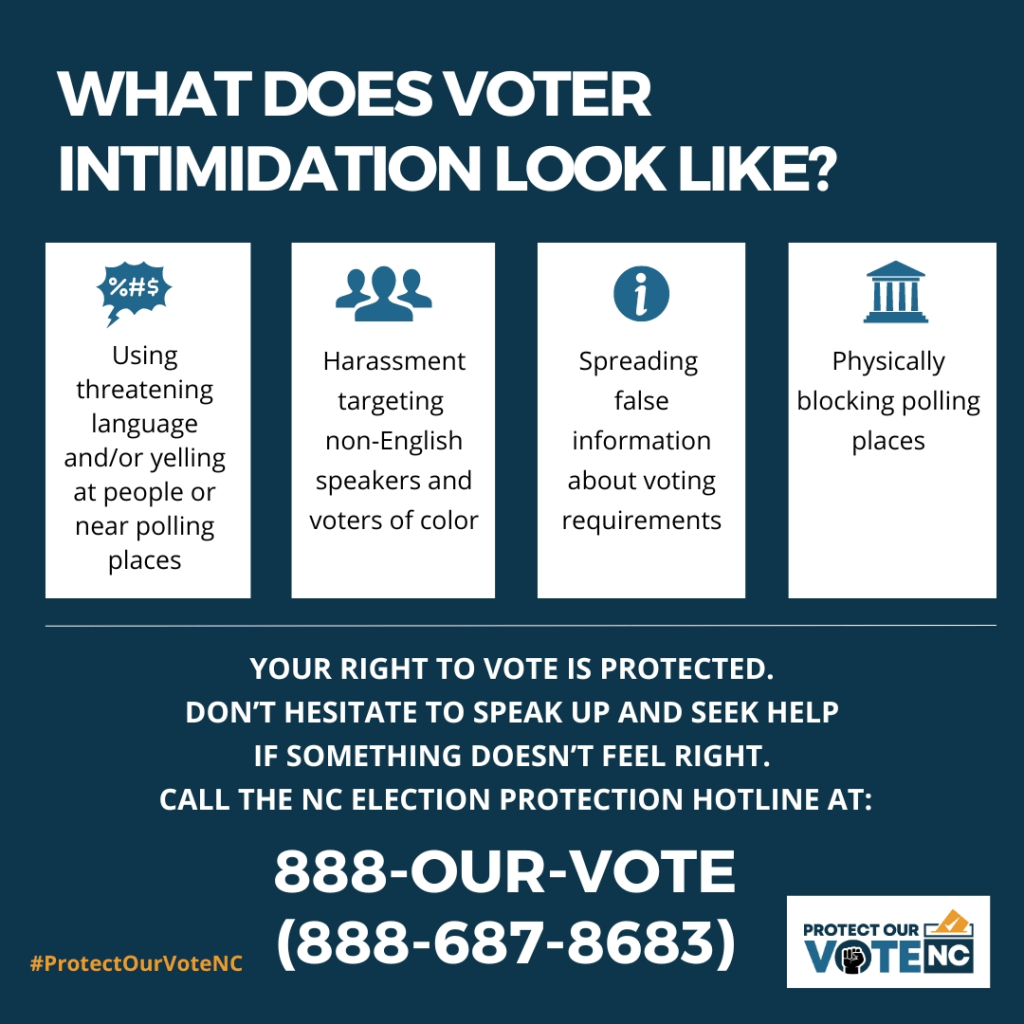
- A Heavily Armed ICE: Complementing the military presence, U.S. Immigration and Customs Enforcement (ICE) has massively increased its spending on weaponry. In the first nine months of 2025, ICE spent over $70 million on “small arms, ordnance and ordnance accessories,” a 700 percent increase over the same period in 2024 (Sommerlad, 2025). This includes armor, chemical weapons, rifles, etc. This occurs as the agency claims it cannot afford to expand the use of bodycams for its agents, even amid increasing reports of excessive force. The presence of heavily armed ICE agents, particularly in immigrant-heavy communities, could create a chilling effect, deterring eligible citizens from going to the polls.
The Blueprint for a Disrupted Democracy
The actions being taken are not random or disconnected. They are the logical execution of the “Mandate for Leadership” (Dans and Groves, 2023). Project 2025 provides intellectual and strategic architecture for a radical centralization of executive power and a dismantling of existing norms and laws.
- The DOJ chapter, by Gene Hamilton, advocates for refocusing the department to align with the president’s agenda.
- The DOD chapter, by Christopher Miller, recommends using the military to support domestic DHS operations.
- The DHS chapter, by Ken Cuccinelli, calls for dismantling the agency as we know it and ending efforts to counter election disinformation.
This is a comprehensive plan to reshape how elections are administered, who is allowed to vote, and the environment in which they vote. By staffing key agencies with loyalists who question democratic outcomes, weakening the laws that protect minority voters, and deploying armed forces in a way that could intimidate the populace, this strategy presents a clear and present danger to the integrity of the 2026 midterms and beyond. The blueprint has been written, and its execution is well underway.
Bauer, B., & Goldsmith, J. (2025, October 18). Opinion | Here’s What Trump Could Unleash by Invoking the Insurrection Act. The New York Times. https://www.nytimes.com/2025/10/18/opinion/trump-insurrection-act.html.
Berzon, A., & Corasaniti, N. (2025, October 22). Trump Empowers Election Deniers, Still Fixated on 2020 Grievances. The New York Times. https://www.nytimes.com/2025/10/22/us/politics/trump-election-deniers-voting-security.html.
Brennan Center for Justice. (2025, August 15). Section 2 of the Voting Rights Act at the Supreme Court. https://www.brennancenter.org/our-work/research-reports/section-2-voting-rights-act-supreme-court
Dans, P., & Groves, S. (2023). Mandate for Leadership: The Conservative Promise. The Heritage Foundation.
Luena Rodriguez-Feo Vileira, & Khalil, A. (2025, October 15). Supreme Court seems likely to limit race-based electoral districts under Voting Rights Act. AP News. https://apnews.com/live/supreme-court-voting-rights-arguments-updates
Luker, S. (2025, August 25). How Trump’s Military Occupation Plans to Control Who Votes in 2026. Substack.com; The Broken Spoke. https://stevenluker.substack.com/p/how-trumps-military-occupation-plans
MSN. (2025). Msn.com. https://www.msn.com/en-us/news/other/fact-check-trump-s-false-claims-about-the-insurrection-act/ar-AA1OUfbg?ocid=BingNewsSerp
“Richard Bernstein: The Trump Administration’s Arguments about the National Guard Threaten the 2026 Elections – Society for the Rule of Law.” Society for the Rule of Law, 3 Sept. 2025, https://societyfortheruleoflaw.org/trump-national-guard-threatens-elections/. Accessed 24 Oct. 2025.
Sommerlad, J. (2025, October 23). Trump has spent 700 percent more on deadly weapons for ICE this year – but agency still claims they can’t afford bodycams. The Independent. https://www.independent.co.uk/news/world/americas/us-politics/ice-weapons-spending-increase-trump-b2849388.html
Suter, T. (2025, October 20). Trump: Insurrection Act “the strongest power a president has.” The Hill. https://thehill.com/homenews/administration/5563329-trump-insurrection-act-the-strongest-power-a-president-has/
Ward, M. (2025, October 8). Why Trump hasn’t invoked the Insurrection Act yet. POLITICO; Politico. https://www.politico.com/news/2025/10/08/white-house-confident-courts-will-greenlight-their-portland-plan-trump-is-telegraphing-plan-b-00597170
 Citizen's Quill
Leave a comment